Council grant programmes: what the data shows
If you lead a community organisation, chances are your local council is one of the first places you look for funding. Council grants are often the most familiar and accessible funding around, but it's not always clear what councils are actually trying to fund, or how that sits within the wider landscape. At Fundsorter we hold data on grant programmes right across Aotearoa, so we took a closer look at council funding. We wanted to see what it tells us, and what it might mean for how you plan and think about your funding.
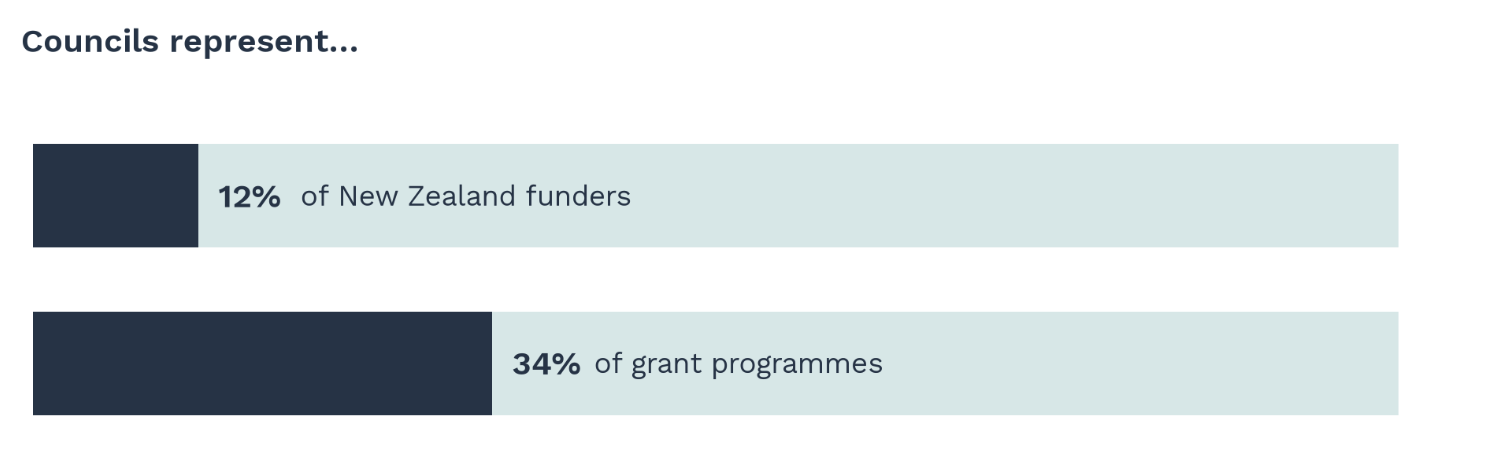
The 78 territorial authorities and regional councils across Aotearoa make up only 12% of New Zealand funders, but between them run about a third of all domestic grant programmes, over 720 of them. A typical council runs seven grant programmes. Auckland Council, the biggest one, runs over 60 programmes. (Note, we are counting programmes here, not the amount of dollars distributed).
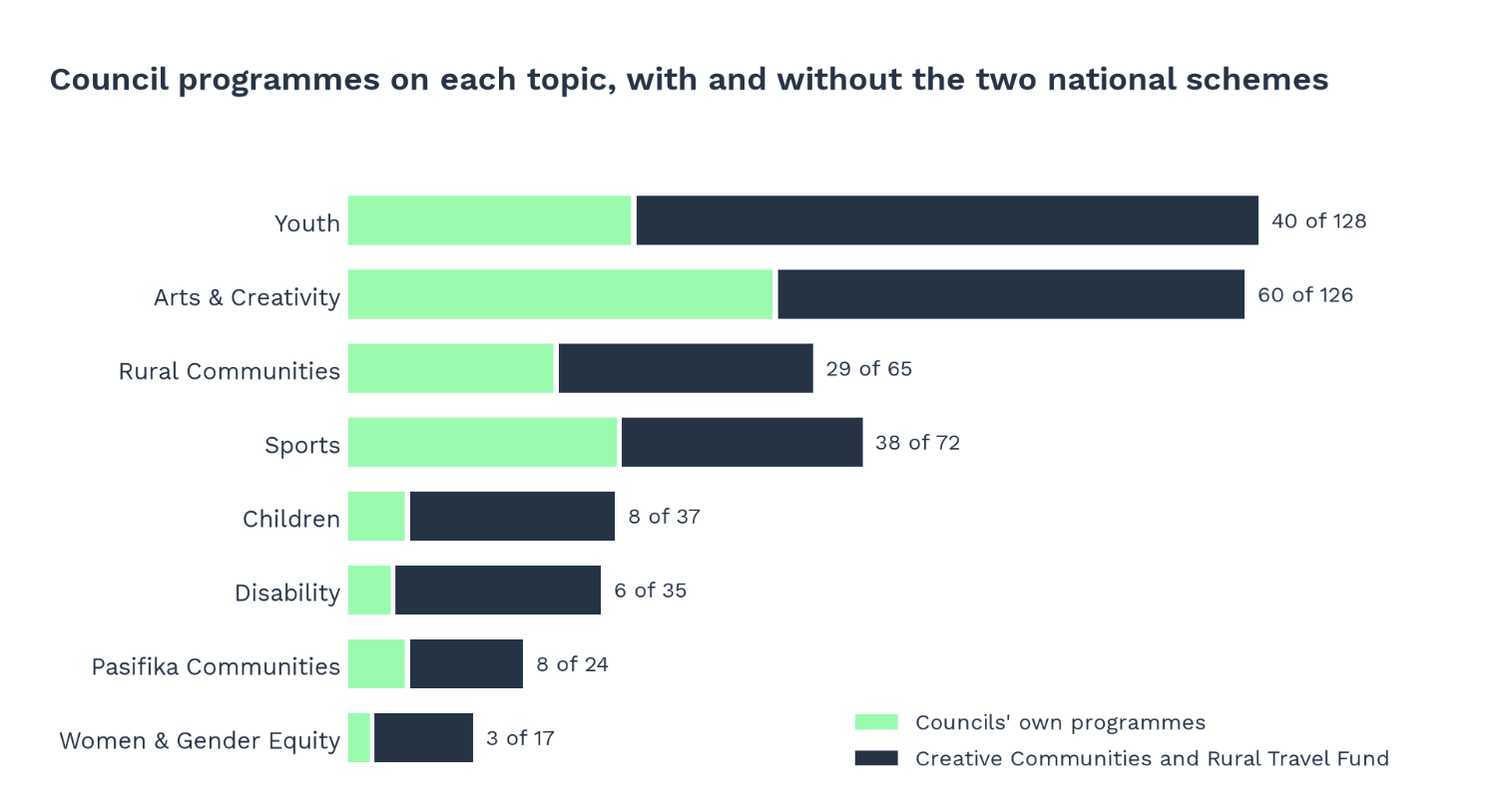
Two large national schemes, delivered locally by councils, have a big impact on the story. Nearly one in seven council grant programmes is a Creative Communities Grant or Sport New Zealand Rural Travel Fund. The criteria and core funding for these programmes comes from Creative NZ and Sport NZ, rather than councils themselves. Counting them makes it look like there is a lot more youth and arts funding than if you only consider the programmes set by the council’s own priorities. For small rural councils the two national schemes are half or more of their programmes.
Places, not people
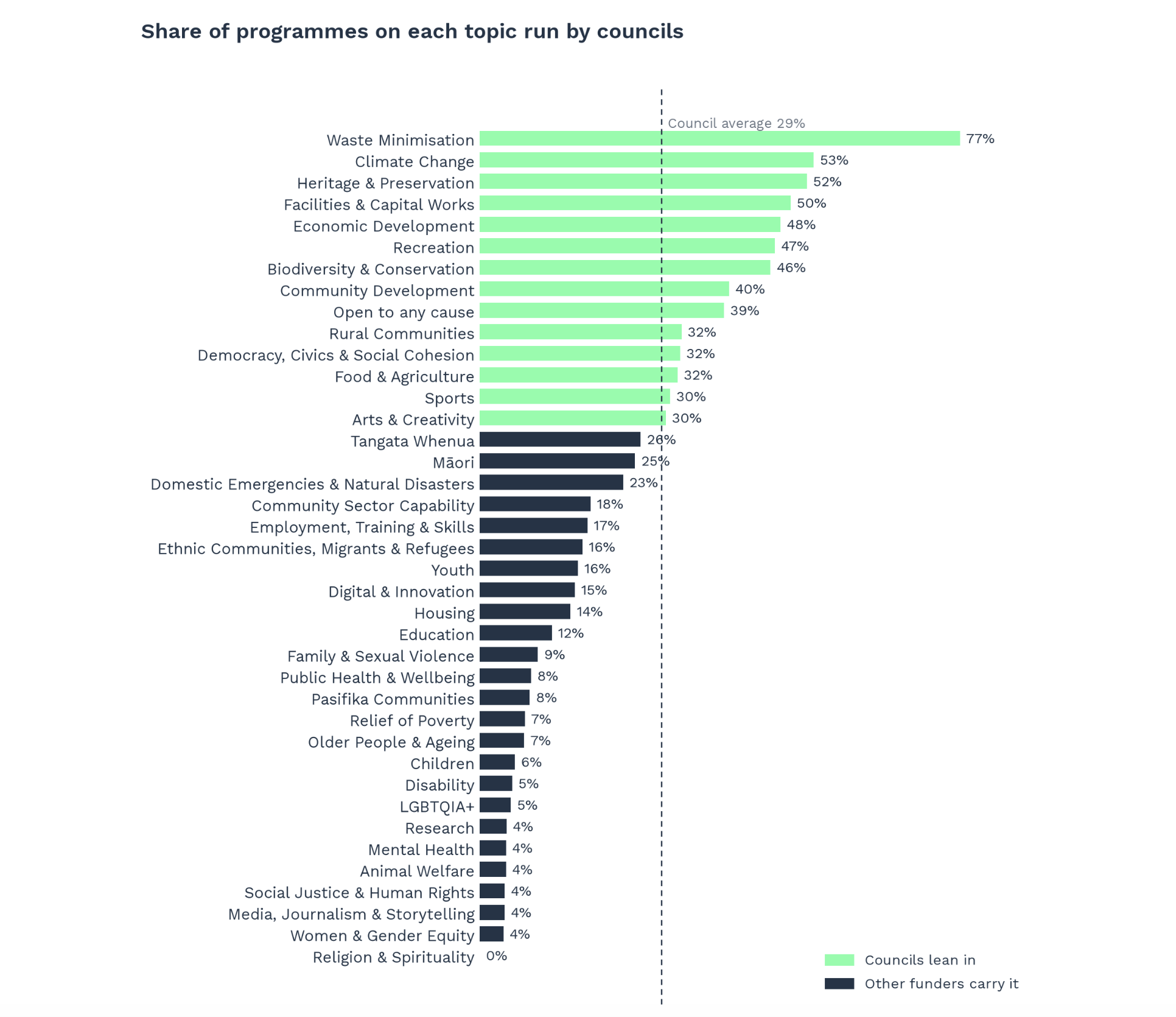
When looking at councils’ own programmes (setting aside the national schemes), there’s a clear trend: councils tend to focus on funding places and things rather than specific groups of people. Councils disproportionately prioritise funding waste minimisation, climate change, heritage, facilities and capital works, economic development, recreation, biodiversity, and community development. Fully three quarters of all waste minimisation funding programmes in New Zealand are run by councils.
For the most part, councils fund the environment (natural, built or economic), while trusts, foundations and government agencies fund the people within it. A number of councils have programmes that mention Māori as a priority, but otherwise, councils are fairly absent when it comes to funding specific groups of people, like older people, children, disability, LGBTQ+ communities, and women.
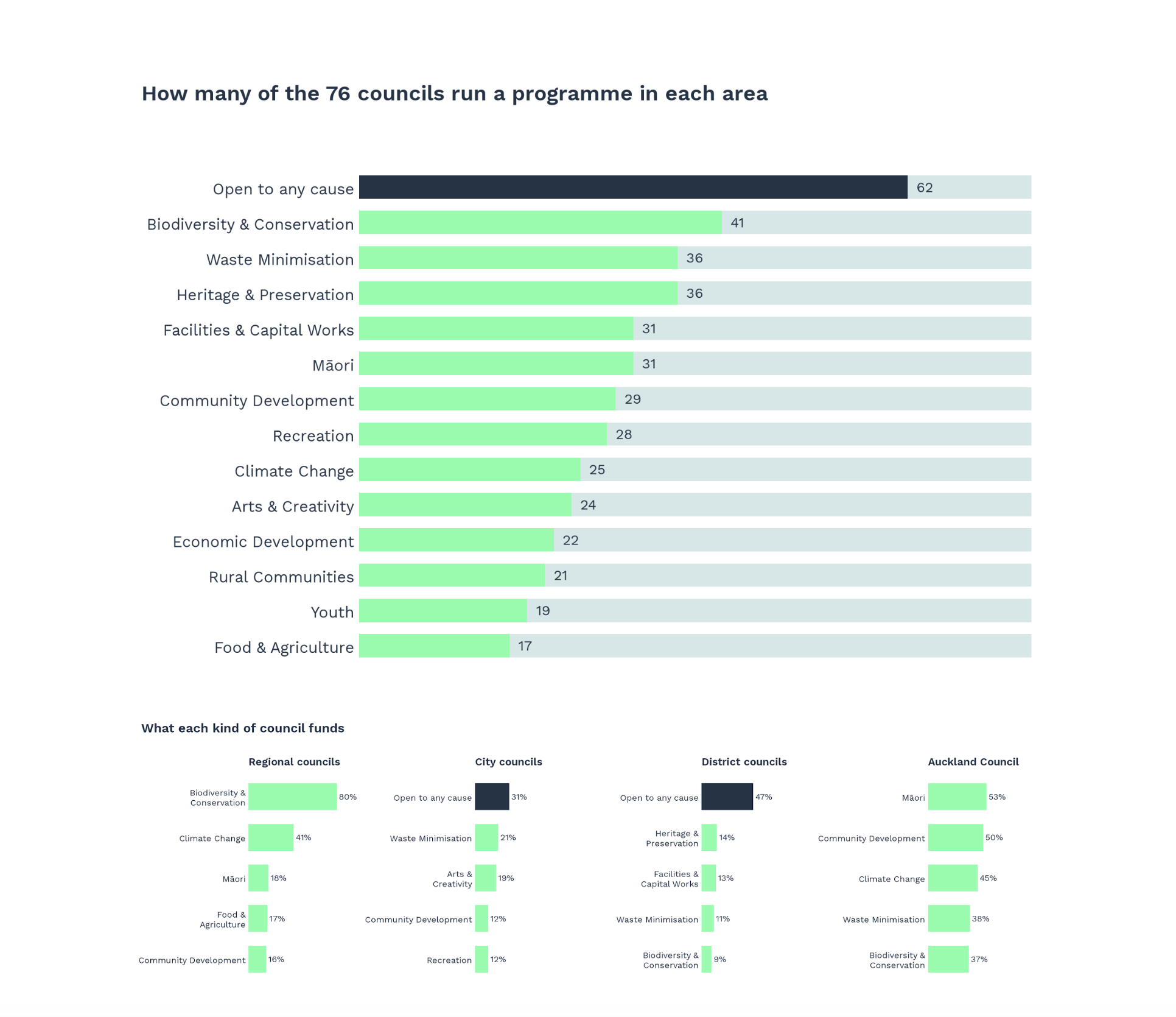
Different types of council funders focus on different types of funding. Regional councils are the environmental funders, focusing on biodiversity, conservation, and climate change. City councils have a big focus on waste minimisation and the arts. District councils largely focus on general purpose funding without specified priorities, followed by heritage and facilities support. Auckland Council, with many local board grants, has more programmes for funding Māori and community development. Councils overall do more generalist funding (1 in 3 council programmes are generalist compared to 1 in 4 for other types of funders).
Open and predictable
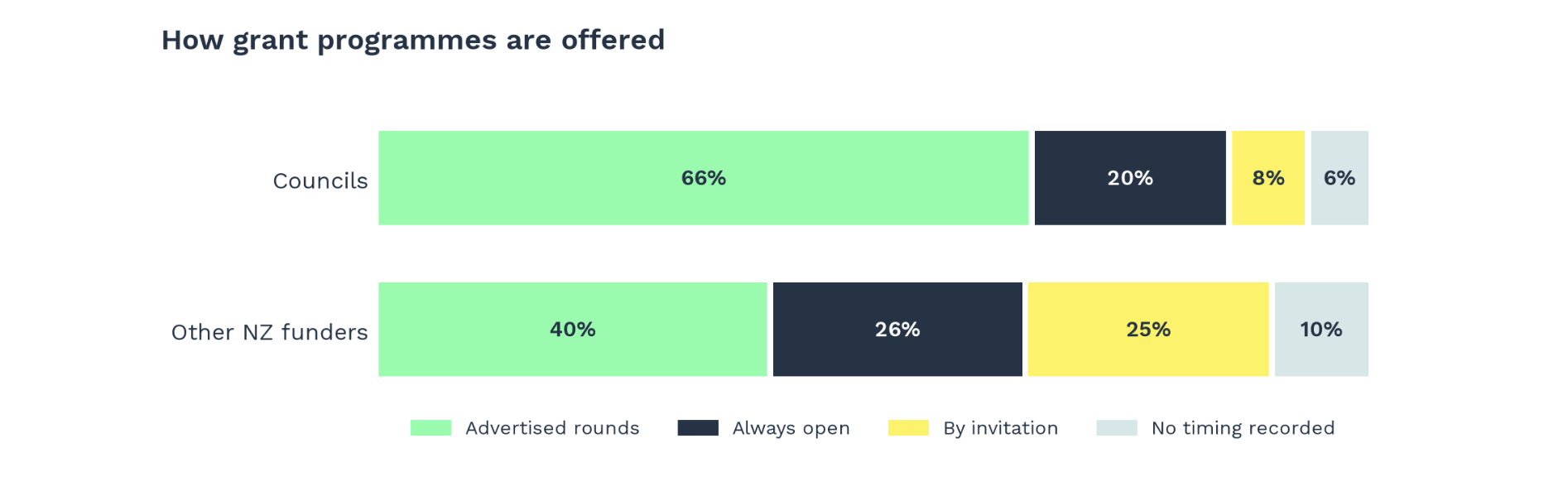
Council grant programmes tend to be openly contestable, meaning anyone can apply. Fewer than 10% of council programmes are relational or by-invitation, compared with a quarter of programmes by other NZ funders. Council funding runs mostly on set opening and closing dates, in clearly published rounds, and tends to follow more regular schedules than other funder types (66% of council funds have set rounds compared with 40% of other funders). This tracks with what council funding is mainly about: accessible, local funding open to all.
So what does this mean for you? If your work is about places and spaces, like the environment, heritage, facilities, waste minimisation or strengthening your local community, your council is a natural partner. And if you'd like help finding the funders that best match your mahi, get in touch with us!